Garden Kneeler Seat Ergonomics for Joint Protection
 Priya RamanSenior Analyst
September 15, 2026. This analysis evaluates the mechanical advantages of utilizing a structured support system for low-impact horticulture. It is designed for homeowners seeking to mitigate the physical toll of repetitive kneeling and standing cycles.
To evaluate the utility of these tools, think of it as a matrix of physical exertion versus mechanical support. Two axes matter here: the elevation of the work surface and the stability of the support frame. When these factors are optimized, the user transitions from high-impact ground work to a controlled, low-impact environment. By mapping equipment to these axes, gardeners can select tools that align with their specific mobility requirements.
The Biomechanical Impact of Ground-Level Gardening
Traditional gardening requires frequent transitions between deep squats, kneeling, and standing. These movements place significant stress on the patellofemoral joints and the lumbar spine. Prolonged kneeling on uneven soil or stone surfaces can lead to bursitis or chronic inflammation, while the act of pushing off the ground to stand requires significant quadriceps and lower back engagement. According to Gardeners Supply, using a dedicated support system is a primary method to prevent back strain and knee pain in the garden, particularly for those managing age-related mobility changes.
The issue is not merely the pressure on the knees, but the lack of lateral support during the transition from a kneeling to a standing position. Without a folding garden bench kneeler, the user must rely entirely on core strength and lower limb power, which may be compromised in seniors or those recovering from injury. This creates a high-risk environment for falls or muscle pulls. The shift toward a folding garden kneeler bench design addresses this by providing fixed handles that act as levers, allowing the upper body to assist in the lifting process.
Furthermore, the density of the kneeling surface dictates how much pressure is absorbed by the soft tissue. Inadequate padding leads to a direct transfer of ground temperature and moisture to the joints, which can exacerbate arthritic symptoms. Once you see it this way, the garden seat is no longer just a convenience; it is a critical piece of ergonomic safety equipment designed to extend the functional lifespan of the gardener.
Mechanical Specifications and Structural Integrity
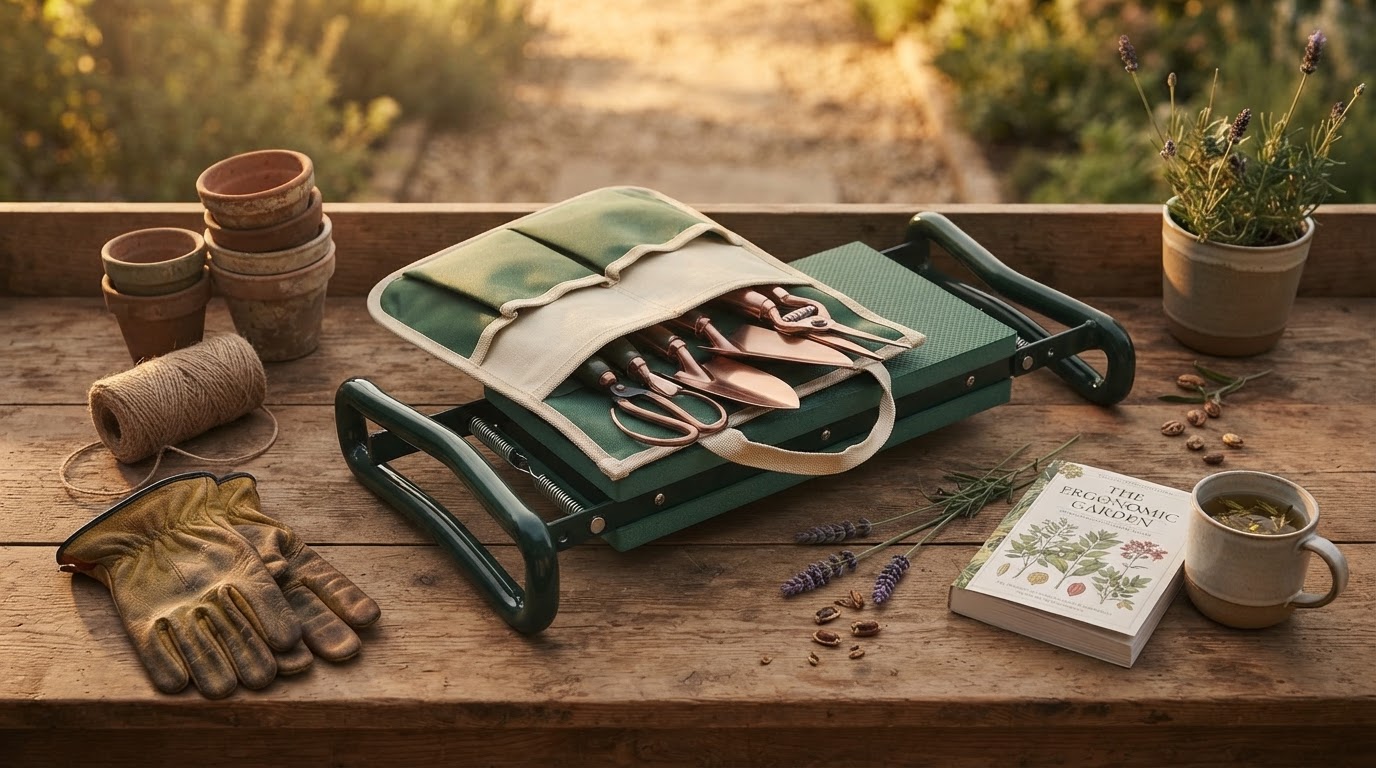
The Garden Kneeler Seat addresses these biomechanical challenges through a dual-purpose flip design. The frame is engineered to function as both a kneeling platform with elevated handles and a standard bench. A core component of this design is the use of powder-coated steel, which provides the necessary rigidity to support vertical loads while remaining light enough for transport.
Weight capacity is a non-negotiable metric for safety. As noted by Hoselink USA, a high-quality frame should support up to 330lb, ensuring that the structure does not flex or collapse under shifting weight. This structural integrity is what separates professional-grade tools from temporary alternatives. When used as a portable garden kneeler and seat combo, the tool allows for a 10.64-inch wider platform in specific models, which provides a larger surface area for weight distribution, reducing localized pressure points on the shins and knees.
Storage and portability are equally critical for usability. High-strength steel models, such as those discussed at Sporty's Tool Shop, often weigh approximately 6 lb and fold flat to a 5-inch width. This allows the user to maintain a folding garden bench kneeler in a vehicle or shed without sacrificing significant space. The inclusion of tool pouches further reduces the need for the user to reach or twist repeatedly, as essential shears and trowels remain within a restricted ergonomic zone. By centering the work around a folding garden kneeler bench, the user maintains a neutral spine and minimizes the rotational forces that often lead to acute back injuries.
Selecting the Optimal Support Framework
Choosing the correct equipment requires an assessment of both the garden environment and the user's physical constraints. The decision rule: prioritize frame gauge and padding density over aesthetic features to ensure long-term joint protection. A tool that is too light may lack the stability required for a portable garden kneeler and seat combo to function safely on soft, aerated soil. Conversely, a tool that is too heavy becomes a burden to transport, leading to non-use.
When evaluating a Garden Kneeler Seat, use the following technical checklist:
- Frame Material: Verify the use of powder-coated steel to prevent rust and ensure a high weight-to-strength ratio.
- Padding Type: Look for high-density EVA foam that resists compression over long periods of use.
- Mechanism Safety: Ensure the folding locks are positive-engagement to prevent accidental collapsing during a transition.
- Lateral Stability: The handles should be tall enough to provide leverage without requiring the user to lean forward excessively.
- Weight Capacity: Confirm the unit is rated for at least 300lb to account for dynamic weight shifts during movement.