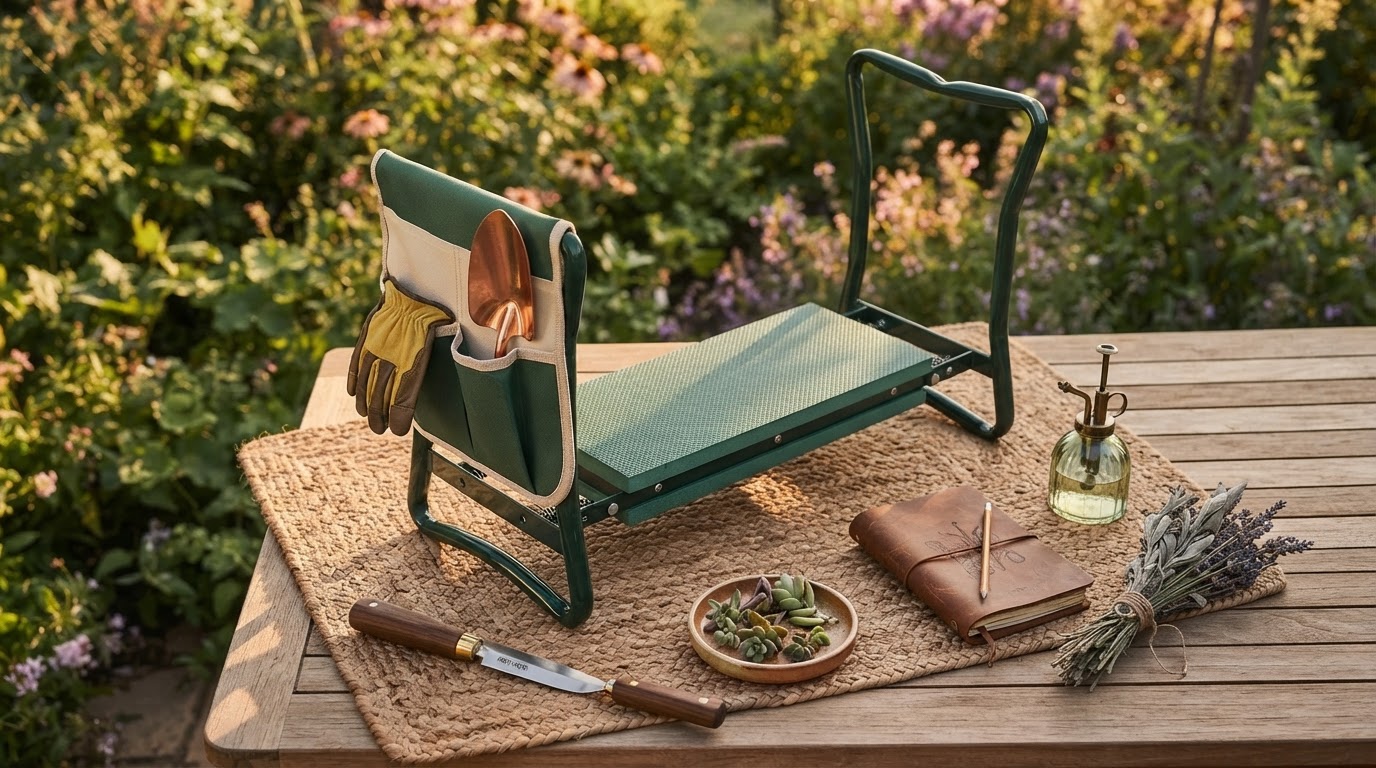
Garden Kneeler Seat Support for Joint Health
 Maya ChenContributing Editor
This analysis evaluates the mechanical intervention provided by the Garden Kneeler Seat for individuals managing chronic joint degradation. It is written for home gardeners who require specific structural support to maintain physiological mobility while performing low-impact yard work.
The Mechanical Failure of Traditional Kneeling
The conventional wisdom says that gardening is a low-impact activity suitable for all ages, but the physics of kneeling tells a different story. When a gardener with compromised cartilage kneels directly on the ground, the force concentrated on the patella can exceed several times their body weight. According to Bob Vila's 2026 testing of the best garden kneelers, the Abco Tech Garden Kneeler and Seat is noted for its sturdy metal frame, which serves as a critical stabilization point. Without this frame, the user relies entirely on lateral hip stability and core strength to descend and ascend—two areas where many seniors experience significant deficit. Here's the part nobody talks about: the standard foam pad found in hardware stores often compresses to less than half an inch under load, providing almost zero shock absorption for the meniscus. This lack of support is why many seek an arthritis friendly gardening tools bench that prioritizes structural rigidity over simple padding. Furthermore, the repetitive motion of standing up from a deep squat places immense strain on the anterior cruciate ligament. For those already dealing with inflammation, a standard garden seat for bad knees acts as a necessary mechanical lever, reducing the muscle recruitment required to return to a standing position.
Structural Integrity of the Garden Kneeler Seat

Photo by Axel Sandoval on Pexels
The Garden Kneeler Seat functions as a dual-purpose mobile workstation designed to mitigate these specific physiological stressors. The primary hardware is a folding garden kneeler bench that utilizes a spring-loaded mechanism for rapid deployment and storage. Unlike plastic alternatives that flex under uneven weight distribution, this unit uses a steel-gauge frame capable of supporting heavy-duty use by seniors who may need to lean heavily on the armrests for balance. The inclusion of a portable garden seat with tool pouch allows for the centralization of equipment, reducing the need for trunk rotation—a common cause of secondary back strain during weeding tasks. When flipped, the device converts into a garden kneeling stool with handles, providing a 17-inch elevation from the ground. This height is mathematically significant; it keeps the hips above the knees, which reduces the acute angle of the knee joint and prevents the compression of blood vessels in the popliteal fossa. For those focused on precision tasks, an ergonomic garden kneeler for weeding must provide this specific height-to-width ratio to prevent tipping. The EVA foam used in the Garden Kneeler Seat is high-density, meaning it resists the bottoming-out effect seen in cheaper, open-cell foam products. This ensures that the pressure is distributed across the tibial plateau rather than concentrated on the kneecap itself.
Quantifying the Utility of Mobility Aids

Photo by Emre Kalyoncu on Pexels
Run the math: if a gardener spends four hours in the yard and stands up twenty times, the cumulative load on the knee joints without assistance can reach several tons of force. A proper garden kneeler and seat configuration absorbs a percentage of this energy through its frame and provides the user with two points of contact for upper-body assistance. As noted in a recent review by The Telegraph, specialized kneelers like the Sarah Raven model are ideal for those who put all their weight on their knees, emphasizing that not all padding is created equal. When selecting a unit, one must look past the aesthetic and focus on the load-bearing specs and the thickness of the bench material. I'll change my mind when a biological supplement can recreate the mechanical leverage provided by a steel armrest. To determine if a specific model meets the needs of a mobility-impaired user, evaluate the following criteria:
- Frame Material: Ensure the frame is powder-coated steel rather than aluminum to prevent shearing under lateral pressure.
- Locking Mechanism: The folding hinges must click into a locked position to prevent accidental collapse during a weight shift.
- Pad Density: The foam should be at least 0.75 inches thick and rated for high-density recovery.
- Handle Height: The handles must extend at least 6 inches above the kneeling platform to provide adequate leverage for the arms.
- Weight Capacity: Verify the unit is rated for at least 330 lbs to account for the dynamic force of sitting down quickly.